


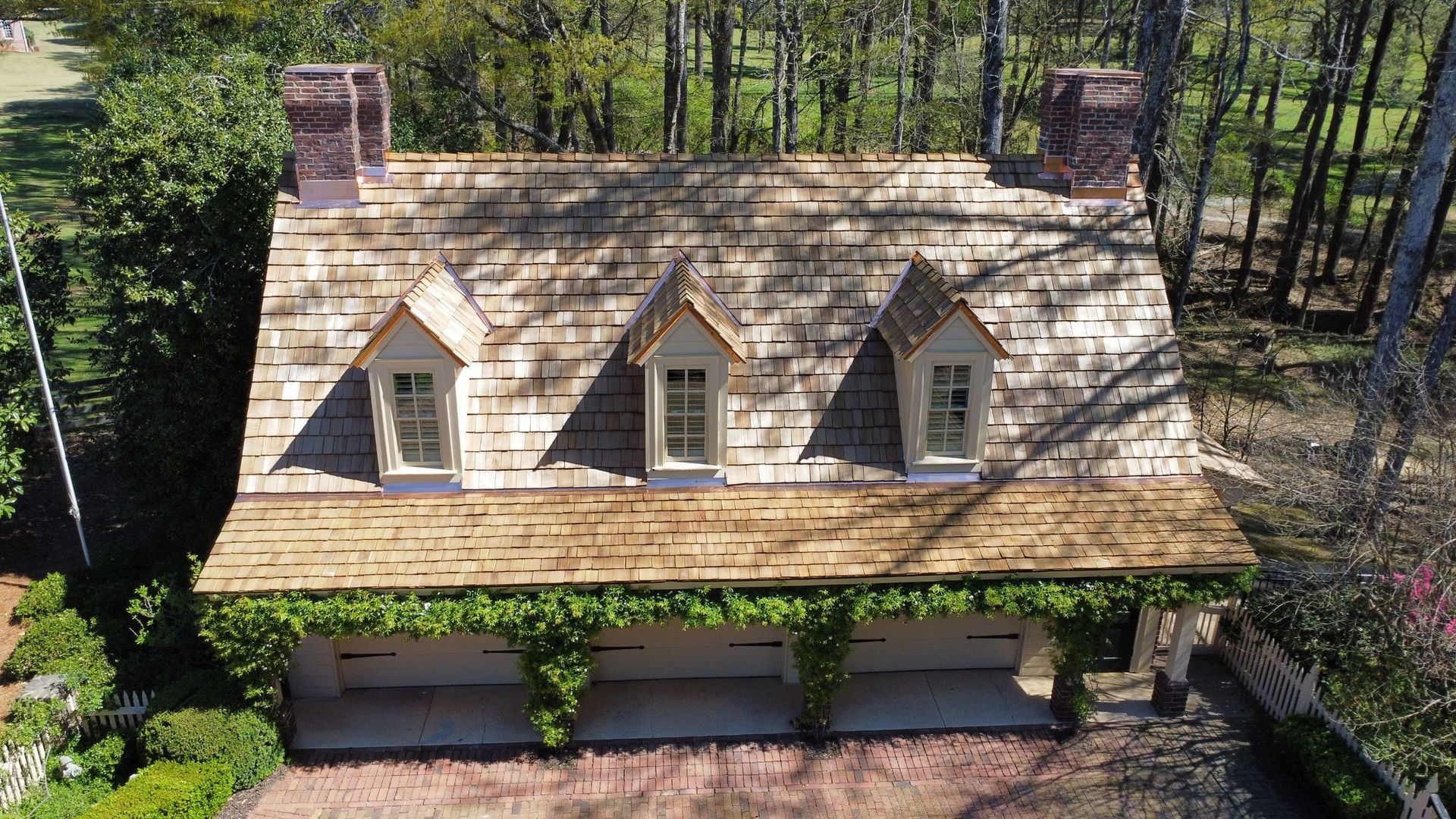
HAIL, BLISTERING, OR GRANULE LOSS: HOW TO IDENTIFY ROOF SHINGLE DAMAGE
Crystal Watterson
May 1, 2026

Share:

From the ground, roof damage isn’t always obvious. What appears to be a minor cosmetic matter can turn into a significant performance problem if you ignore or misidentify it. If your home has asphalt shingles, the three most common kinds of damage are hail impact, blistering, and granule loss.


At a glance, all three categories of damage can appear similar. However, each has unique characteristics, causes, and implications for your roof’s ability to protect your home. Knowing these differences helps you determine whether you need a targeted repair or total roof replacement.


What Hail Damage Looks Like Up Close

Rain falling on a wet road with blurred green trees in the background

When you know what you’re looking for, hail damage can be the easiest of all three kinds to identify. As hailstones strike asphalt shingles, they create localized impact points, which can bruise, crack, or dislodge the protective granules. Up close, hail damage looks like small dark spots that are round or slightly irregular. These are points of contact where granules have been knocked away. They can feel spongy or soft to the touch, which indicates if the underlying asphalt mat has been compromised. In the most serious circumstances, you might see splits or fractures radiating from the point of impact.


Three factors usually determine the size and severity of the damage, and they are wind speed, the size of the hailstones, and the condition and age of the shingles. Newer shingles might resist minor impacts; brittle or older shingles are more likely to crack. Hail damage is more likely to be random instead of uniform. You might notice clusters of impacts along one slope of the roof, particularly the side that faced the storm. If your home has metal roofing components, such as flashing or vents, they might show dents that can help confirm hail caused the damage.


From a performance standpoint, hail damage can look minor but still be serious. Granule loss exposes the underlying asphalt layer to UV rays, which can accelerate aging. If the mat gets bruised or cracked, there’s a growing chance of water infiltration over time.

What Blistering Looks Like Up Close

Blistering isn’t so much an impact event as it is an issue related to manufacturing or ventilation. It happens when moisture or gases trapped inside the shingle expand because of heat, resulting in raised areas on the surface or small bubbles. At close range, blistering appears as small, pimple-like bumps scattered across the shingle’s surface. These blisters might eventually pop, leaving behind tiny pits where granules are lost. These marks differ from hail damage in their uniformity of distribution and size.


Poor attic ventilation often causes blistering, where excessive heat builds up under the roof deck. However, it can also result from manufacturing defects that trap moisture in the shingle during physical production. One key distinction is that blistering tends to affect large swathes of a roof evenly rather than appearing in isolated clusters. You won’t typically see the same type of cracking or bruising related to hail impacts.


Performance-wise, blistering is typically a cosmetic issue when still in the earliest stages. That said, once blisters rupture and granules are lost, the shingles become increasingly susceptible to UV degradation. In time, this can short roofing lifespan, particularly in hot climates or regions with strong sun exposure.

What Granule Loss Looks Like Up Close

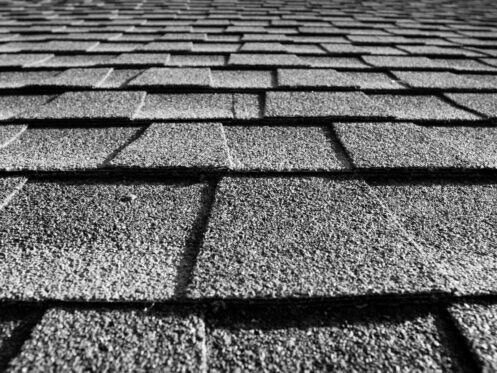
Granule loss happens in one of two ways. First, it can be a standalone issue. Second, it can be a result of other kinds of damage, including blistering or hail. Asphalt shingles are covered with mineral granules; these provide fire resistance and protection from UV rays. The underlying asphalt is exposed when the granule coating wears away. If you look up close, you’ll see granule loss on the shingle surface as shiny, smooth, or darker patches. These areas might look nearly bald compared to any surrounding sections that still feature a textured, rough appearance.


Some granule loss is natural over time. This is particularly true during the first few months after installation and also toward the end of a roof’s lifespan. You or a member of your household might notice granules collecting in downspouts or gutters as an early warning sign. However, premature or excessive granule loss can indicate problems. Potential causes include low-caliber shingles, prolonged UV exposure, foot traffic on your roof, improper installation, or other underlying issues.


In terms of performance, granule loss directly impacts a roof’s capacity to withstand weathering. When the protective layer begins to diminish, shingles can dry out, crack, or become brittle. Leaks become more likely. The overall durability of a roof system decreases over time.

Typical Causes and Contributing Factors

Every kind of shingle damage has unique causes, but the contributing factors overlap. Weather obviously drives hail damage, especially in regions known for severe storms. Hailstone velocity, density, and size influence the level of damage. Ventilation issues usually cause blistering from below, but manufacturing defects can contribute as well, though that’s less common under current quality-control standards. Environmental exposure and age heavily influence granule loss.

How Each Type of Damage Impacts Roof Performance

Hail damage presents the most immediate risk to roof performance, as even small impact points can compromise shingle integrity, letting water seep in. The impact of blistering is usually more gradual, slowly accelerating aging and compromising waterproofing. Granule loss has a cumulative and direct impact on performance; as more granules are lost, shingles aren’t as effective at shielding the asphalt layer from the elements.

Which Repairs Make Sense?

Your repair options are usually limited to targeted repairs or a full replacement. Targeted repairs are usually more effective when your roof has limited damage and is in good overall condition. Shingle replacement might manage sporadic hail damage or granule loss, and improving attic ventilation might manage localized blistering. Targeted fixes work better for isolated damage and newer roofs.


A full roof replacement might be the better move when you have age-related wear, severe damage, and widespread problems. Hail damage across multiple slopes might be past the point of repair. Widespread blistering might result from systemic issues that spot fixes can’t address, and significant granule loss could indicate shingles are nearing the end of their lifespan.


Always consider cost-effectiveness. Minor repairs might extend the lifespan of a newer roof, but an older roof that requires constant upkeep might cost more to maintain than a full replacement.

Choosing the Right Option for Your Roof

Every kind of damage tells its own story about what your roof has gone through, but also points to what your home’s top layer needs moving forward. A professional inspection can confirm any diagnosis you make and assess your roofing system’s overall condition. Taking action early keeps minor issues from turning into serious problems, and the right answer can range from replacing a handful of shingles to investing in a new roof.


We offer roof repairs and replacements for homes in Alpharetta and the surrounding Georgia communities. Area residents rely on us for everything from storm damage and insurance claims to gutters and skylights. Contact Greater American Roofing to schedule your no-cost roof inspection so we can take a look at your shingle damage up close.


Meet the Author

Smiling blonde woman in a black blazer and blue necklace against a neutral background

Crystal Watterson

Chief Financial Officer

As a part of the Greater American Roofing family, I love starting each day with our team. I take pride in knowing that our team has the same goal of providing families with the most high-quality, roofing system in the industry.


Red, white, and blue shield logo with stars and stripes, topped by stylized rooftops and windows

Recent Posts

Black-and-white close-up of overlapping roof shingles receding into the distance
By Crystal Watterson May 8, 2026
Class 3/4 shingles offer the best protection for Georgia roofs. Greater American Roofing explains why and how that protection pays off.
Roof with two skylight windows on gray shingles under a clear sky
By Crystal Watterson April 8, 2026
Knowing how to identify flashing issues can help prevent leaks, and expensive roof repairs. Greater American Roofing has some answers.

Gloved hand cleaning a roof gutter with debris near the edge of a house
By Crystal Watterson April 1, 2026
What is the best way to clean the roof of pollen in the spring? Greater American Roofing explains several do's and don'ts that help.
Damaged shingle roof with black tar patches and missing sections on a house
By Crystal Watterson March 10, 2026
Roof problems can develop during the winter months. Greater American Roofing explains what to look for and offers great solutions.
Windshield wiper clearing raindrops on a car windshield in a car wash tunnel
By Crystal Watterson March 3, 2026
If the gutters aren't working correctly, it can cause damage to your roof and your home. Greater American Roofing has some helpful ideas.

White house gable with vented attic window and gray shingles against a pale sky
By Crystal Watterson February 12, 2026
When spring arrives it often brings some harsh weather. Greater American Roofing advises to get the roof checked before something happens.
Rain streaks across a blurred view of green foliage and a wet road beyond a window.
By Crystal Watterson February 5, 2026
After a wind or hail storm, what does a homeowner need to look for with regards to their roof? Greater American Roofing has some guidelines.
Bundles of insulation between wooden rafters in an attic ceiling
By Crystal Watterson January 28, 2026
The insulation and ventilation of your home will affect the roof. Greater American Roofing explains why and offers some suggestions.
Window in a gray shingled roof reflecting clouds and sky
By Crystal Watterson January 16, 2026
Knowing the roof is in good shape before winter is a good plan. Greater American Roof discusses roof maintenance and how it helps.
Worker in safety vest and hard hat inspecting solar panels on a rooftop
By Crystal Watterson December 16, 2025
There are many reasons why regular roof inspections may be a good idea. Greater American Roofing lists some of those reasons.