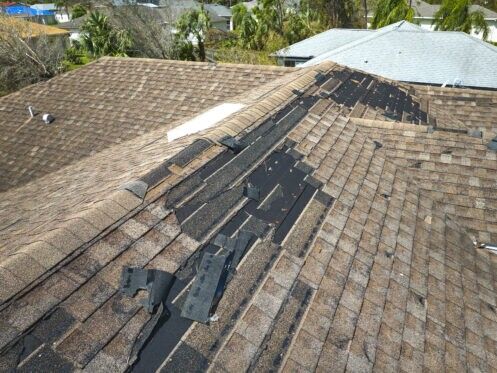


Georgia homeowners know how severe weather can occur with little warning. Hailstorms, thunderstorms, and high winds sweep through North Georgia and Metro Atlanta every spring and summer. Your roof absorbs the brunt of that impact each time, so choosing the right shingles can make the difference in how well your roof holds up.
Impact-resistant shingles offer a level of protection that standard products simply cannot match. But before you invest in a roof replacement, it’s important to understand what each impact-resistance class offers your home.
What Are Impact-Resistance Classes

During testing, Underwriters Laboratory (UL) researchers drop steel balls of different sizes onto the same spot on a shingle sample from varying, controlled heights. Each steel ball simulates a real hailstone striking the roof at terminal velocity. Based on performance, shingles are rated from Class 1 through Class 4. They are considered impact resistant if they can tolerate a steel ball hitting them twice in the same spot without cracking or showing other signs of damage.
Class 1 shingles are the weakest, withstanding only a 1.25-inch steel ball dropped twice from a height of 12 feet. These are also quite combustible so not useful in fire-prone areas.
Class 2 shingles represent an entry-level option for impact resistance. They withstand a 1.5-inch steel ball dropped twice from 15 feet, simulating a hailstone approximately the size of a marble. These shingles use standard asphalt construction and offer modest durability beyond that of traditional shingles. They are suitable in areas with occasional light hail but fall short during stronger storms.
Class 3 shingles step up the protection significantly. They can endure the impact of a 1.75-inch steel ball dropped twice from 17 feet, simulating quarter-sized hailstones. Manufacturers often use thicker asphalt layers or fiberglass reinforcements to achieve this rating. Class 3 products balance cost and performance for homeowners who want solid protection without the top-tier price tag.
Class 4 shingles deliver the highest impact resistance available. They can withstand a 2-inch steel ball dropped twice from 20 feet, replicating the force of a golf ball-sized hailstone. Most Class 4 products use SBS-modified asphalt, a synthetic rubber polymer blended into the shingles. This rubberizing effect makes the shingles flexible enough to absorb impact rather than crack. Class 4 shingles represent the strongest defense against severe hail events.
Georgia’s Severe Weather and Your Roof
Georgia ranks among the top five states in the country for hail-related property damage. Between 2012 and 2021, the state recorded 144 significant hailstorms, causing hundreds of millions of dollars in damage. In 2013, Henry County experienced Georgia’s worst recorded hailstorm, with the largest recorded hailstone measuring 2.75 inches.
North Georgia and the Metro Atlanta corridor sit in a zone that frequently produces severe thunderstorms. These storms generate heavy rainfall and damaging hail in rapid succession, especially from April to June. Wind adds yet another layer of risk, and Georgia falls within FEMA Wind Zone 3, where winds can blow as high as 200 mph. A shingle that can withstand both hail and airborne debris will fare far better in this climate.
Pros of Upgrading to Class 3 or Class 4 Shingles
The advantages of impact-resistant shingles extend well beyond surviving a hailstorm. Here are other benefits Georgia homeowners should consider:
Possible savings of 10% to 35% off your annual policy premium
Reduced repair frequency after hailstorms and severe weather events
Longer expected lifespan for Class 4 products
Increased home resale value
Asphalt that ages more gracefully and stays flexible longer
Insurance savings deserve special mention here. State Farm, one of the largest carriers in Georgia, offers discounts to homeowners in the state for impact-resistant roofing. Many other carriers also offer premium reductions once you provide the manufacturer’s certification and contractor documentation. Over a 20-year lifespan, those annual savings might even pay for your next roof.
Downsides and Cost Considerations
The cost difference matters most at the point of purchase. If a standard roof replacement runs a certain amount, expect Class 4 materials to add a noticeable percentage on top. Labor costs remain the same because the installation process does not change; the premium exists entirely in the materials.
Here are other drawbacks to consider:
Insurance discount percentages that vary by carrier
Shingle manufacturer that may not cover hail damage
Not tested for cosmetic denting or granule loss
Fewer color and style options compared to standard shingles
When Impact-Resistant Shingles Pay for Themselves
Consider a major hailstorm that rolls through and damages your standard shingle roof, for example. You now face an insurance deductible, potential claim complications, and repair costs. If the damage requires a full replacement, the remaining useful life of the shingles is lost. Class 4 roofs in the same storm may come out on the other side with little or no damage. You avoid the deductible, skip the claims process, and continue using the same roof. By avoiding the need for replacement, you can offset the original cost difference several times. Now add that to annual insurance discounts, and the math shifts in favor of early protection.
Homeowners who plan to stay put for seven years or more typically see a strong return on the upgrade. In Georgia’s hail-prone climate, the payback period can shrink even more as you avoid multiple storm damage repairs.
What to Look for in Impact-Resistant Shingle Products
Not all impact-resistant shingles perform equally, even within the same class rating. The UL 2218 test determines whether a shingle cracks, but it does not consider denting or other cosmetic factors. That means two Class 4 shingles from different manufacturers can look different on the other side of a heavy storm.
Look for shingles that carry both high-impact resistance and strong wind-resistance ratings. A shingle rated for winds of 130 mph or higher pairs well with a Class 3 or Class 4 impact rating. Some insurance carriers also offer a discount for shingles that meet multiple thresholds.
Resisting algae also deserves consideration in Georgia’s humid climate. This is because algae feed on the limestone in asphalt shingles, accelerating their deterioration over time. Many impact-resistant shingles now include copper granules that deter algae growth. Choosing a product with this built-in protection helps your roof maintain its appearance as well as its structural performance through the long, humid summers.
Always verify that the product carries an official UL 2218 classification level from the Underwriters Laboratory. Some products advertise impact resistance without third-party certifications. However, only shingles with verified UL 2218 or FM 4473 certifications qualify for insurance discounts. When you work with Greater American Roofing, we provide manufacturer documentation that confirms the exact class rating after installation.
Making the Right Choice for Your Home
Not every home in Georgia faces the same level of storm risk. Properties in North Georgia and Metro Atlanta encounter more frequent severe weather than those along the southern coast. Your roof size, insurance carrier, and budget all play roles, too.
Start by calling your insurance provider before committing to any shingle class. Inquire about the specific discount your policy qualifies for with Class 3 or Class 4 products. Get that figure in writing so that you can calculate your projected savings and break-even timeline accurately.
Greater American Roofing is a veteran-owned roofing company founded in 2020, serving Alpharetta, North Georgia, and the surrounding areas. We specialize in roof replacement and storm damage repair for residential and commercial properties. Our BBB A+ rated team provides free inspections, design consultations, and on-site executive oversight for every project.
Contact us today to discuss which impact-resistant shingles best fit your home and budget.
Meet the Author

Crystal Watterson
Chief Financial Officer
As a part of the Greater American Roofing family, I love starting each day with our team. I take pride in knowing that our team has the same goal of providing families with the most high-quality, roofing system in the industry.