


TOP SIGNS YOU NEED ROOF REPAIR AFTER A GEORGIA STORM
Crystal Watterson
August 12, 2025

Share:

Being a homeowner means needing to worry about a huge number of things, such as an unexpected issue cropping up that forces you to spend hundreds or thousands on repairs. One concern in Georgia is the risk of a major storm damaging your roof and causing it to leak.


Statistics show that the average maximum wind speeds in much of the state are quite a bit higher now than they were in past decades. This has led to an increasing number of homes being at a fairly high risk of damage. While a storm won’t always cause roof damage, you should definitely make sure to get your roof inspected if you notice any of these signs.


ROOF IS LEAKING

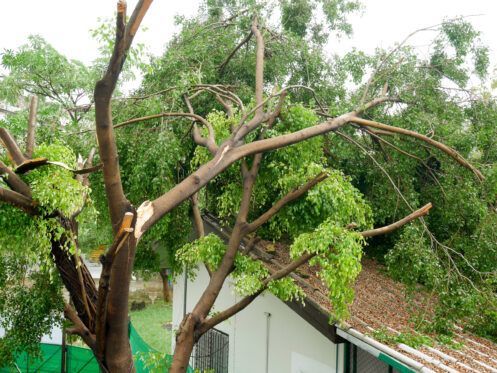
Broken tree limbs over a small white building after storm damage

The most obvious sign that you need to have your roof repaired is if it has started leaking. Minor leaks may not be visible without going up into the attic, but a larger leak can result in water spots and yellow or brown stains on the ceiling just below the attic. If you suspect your roof is leaking, it’s essential that you get it inspected immediately. Part of the reason is due to the risk of mold growth in the attic. The bigger concern is that water can damage the underlying roof deck and trusses, resulting in the roof needing to be completely replaced and the cost of the replacement being higher.


MISSING OR CRACKED SHINGLES


After a major storm, you should always go outside and visually inspect your roof if possible to see if there are any shingles that are missing or cracked. You should also look around your yard for any pieces of shingles. Even a few missing shingles greatly increase the chances of your roof leaking, which is why you want to have a professional roofing company replace them as soon as possible.


SHINGLES FLAPPING IN THE WIND


Strong winds have the potential to get under shingles and lift them up, which can result in some of them starting to come loose. If any shingles are loose, you’ll often hear them flapping and hitting against the roof when the wind is blowing. Loose shingles will usually end up breaking or getting torn off. Once even one or two shingles in an area start coming loose and flapping in the wind, it also often results in the shingles in the overlapping row coming loose and getting torn off as well. That means you can end up with a bare patch where the underlayment is exposed, which allows water to get underneath the remaining shingles and potentially cause the roof to leak.


The chances of a leak are especially high if your roof has felt underlayment. Synthetic and rubberized asphalt underlayment are both fully waterproof. Asphalt-saturated felt underlayment is only water resistant, which means water can still start to soak through it. This issue is why felt underlayment isn’t all that common anymore and is mostly used by homeowners who are looking to save money when replacing their roof.


LOOSE OR SAGGING GUTTERS


Strong winds also have the potential to cause gutters to start coming loose and sagging in spots. This issue doesn’t necessarily mean you’ll need to have the roof itself repaired, but it’s still something that you’ll want to get fixed as soon as you can. Sagging gutters often don’t drain properly and can quickly start overflowing during a rainstorm. The concern in this situation is that the water will then pool up next to the foundation, which can lead to major foundation damage and/or flooding inside your house.

LARGE BRANCHES ON YOUR ROOF


Larger tree branches and limbs that get broken off during a major storm can crash into the roof with enough force to break or crack some or all of the shingles in the area. That’s why you should always make sure to keep your trees trimmed back so that they don’t overhang your roof. While downed branches won’t always cause damage, it’s still important that you schedule a storm damage inspection if you see any on your roof.

GRANULES WHERE YOUR DOWNSPOUTS DRAIN OUT


The granules on shingles create a protective layer that helps to prevent the asphalt from UV damage and weathering. While shingles always shed granules over time, hail can sometimes knock so many of the granules off that it creates bald spots on the shingles. The main concern in this situation is that it results in the shingles deteriorating faster and the roof needing to be replaced sooner. That’s why another thing you should do after a major storm is check where your downspouts drain out to see if there is an excessive amount of granules in those areas.

THE IMPORTANCE OF A PROFESSIONAL STORM DAMAGE ASSESSMENT


Some types of roof damage, like missing shingles, can be easy to spot from the ground. Other types of damage can be much more difficult to spot unless you know exactly what to look for. Professional roofers are trained to properly spot and assess all types of storm damage. They will be able to quickly and accurately determine if your roof needs repairs or possibly replacement. In cases of major damage, a roofing company can also tarp the affected areas to ensure that the roof doesn’t leak while you’re waiting to get it repaired or replaced.


Homeowner’s insurance almost always covers storm damage to a roof and will pay at least part of the cost of the roof repairs or replacement. The only exception is if the roof was already in poor condition and damaged to begin with. This is one reason why scheduling a professional roof inspection after any major storm is so important, as it gives you a record showing that your roof is still in good condition.


Let’s say that the most recent storm damaged numerous roofs in your area, but your roof came out unscathed. You might not have a record proving your roof was still in good condition after the storm. If it gets damaged by another storm later on, there’s a good chance that your insurance provider will deny your claim. That’s because they can state that the damage resulted from the previous year’s storm.


Some insurance companies give you up to two years from the date of the damage to file a claim, but others only give you 30 or 60 days. The fact that your timeframe to file a claim is limited is another reason why it’s essential to schedule an immediate inspection after every major storm. That way, you can quickly determine if you need to file a claim so that you don’t miss out on getting some of the costs to fix the damage covered.

CALL US TODAY


Greater American Roofing is a veteran-owned company that’s dedicated to delivering top-notch residential and commercial roofing solutions in Alpharetta and the surrounding areas. We work with a wide variety of materials, including asphalt shingles, composite shingles, cedar shake shingles, roof tiles and metal roofing. Whether you need to have your roof repaired or replaced, you can count on us to work quickly and get the job done properly.


To schedule an inspection and storm damage assessment for your Georgia home or business, contact us today.

Meet the Author

Portrait of a smiling blonde woman in a black blazer and blue necklace against a neutral background

Crystal Watterson

Chief Financial Officer

As a part of the Greater American Roofing family, I love starting each day with our team. I take pride in knowing that our team has the same goal of providing families with the most high-quality, roofing system in the industry.


Red, white, and blue shield logo with stars and stripes and stylized houses on top

Recent Posts

Black-and-white close-up of overlapping roof shingles receding into the distance
By Crystal Watterson May 8, 2026
Class 3/4 shingles offer the best protection for Georgia roofs. Greater American Roofing explains why and how that protection pays off.
Rain streaking across a car window with blurred green trees outside
By Crystal Watterson May 1, 2026
How can you know if the roof has been damaged? Greater American Roofing has some tips on what to look for and what happens if it's ignored.
Roof with two skylight windows on gray shingles under a clear sky
By Crystal Watterson April 8, 2026
Knowing how to identify flashing issues can help prevent leaks, and expensive roof repairs. Greater American Roofing has some answers.
Gloved hand cleaning a roof gutter with debris near the edge of a house
By Crystal Watterson April 1, 2026
What is the best way to clean the roof of pollen in the spring? Greater American Roofing explains several do's and don'ts that help.
Damaged shingle roof with black tar patches and missing sections on a house
By Crystal Watterson March 10, 2026
Roof problems can develop during the winter months. Greater American Roofing explains what to look for and offers great solutions.
Windshield wiper clearing raindrops on a car windshield in a car wash tunnel
By Crystal Watterson March 3, 2026
If the gutters aren't working correctly, it can cause damage to your roof and your home. Greater American Roofing has some helpful ideas.
White house gable with vented attic window and gray shingles against a pale sky
By Crystal Watterson February 12, 2026
When spring arrives it often brings some harsh weather. Greater American Roofing advises to get the roof checked before something happens.
Rain streaks across a blurred view of green foliage and a wet road beyond a window.
By Crystal Watterson February 5, 2026
After a wind or hail storm, what does a homeowner need to look for with regards to their roof? Greater American Roofing has some guidelines.
Bundles of insulation between wooden rafters in an attic ceiling
By Crystal Watterson January 28, 2026
The insulation and ventilation of your home will affect the roof. Greater American Roofing explains why and offers some suggestions.
Window in a gray shingled roof reflecting clouds and sky
By Crystal Watterson January 16, 2026
Knowing the roof is in good shape before winter is a good plan. Greater American Roof discusses roof maintenance and how it helps.