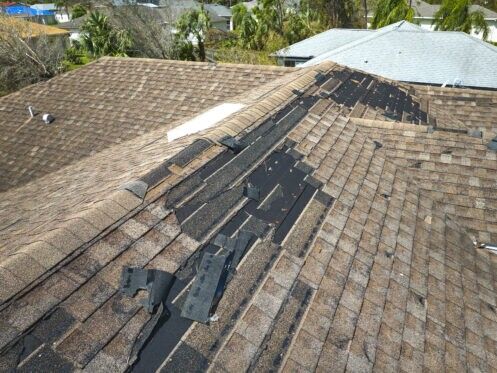
When spring storms hit, wind usually finds the edges first. The perimeter of the roof takes more uplift than the center, which is why damage often starts along rakes, eaves, and the first few rows of shingles. A roof can look fine from the street and still have loosened edges that flutter during gusts. That flutter matters because it works like a repeated tug on the adhesive strip that holds shingles down. Once that bond weakens, wind can slip under the shingle and lift it higher, which can tear the shingle or expose the underlayment.
Roof edges also connect to fascia boards, drip edge metal, and gutters, so movement in one piece can create gaps in another. A slightly bent drip edge can channel rain behind the gutter instead of into it. A gutter run that pulls away from the fascia can create a thin, open line where water drops behind the trim. These issues rarely look dramatic at first. They might appear as faint staining on fascia, peeling paint, or a damp line along the soffit after heavy rains. A roofing professional will check how tightly materials sit, how fasteners are holding, and whether the edge details still direct water away from wood.
Loose Shingles and Soft Spots Do Not Always Look Like Damage
Many homeowners expect storm damage to look obvious, like missing shingles or a bare patch. Early trouble often looks quieter. Shingles may sit slightly uneven, corners may not lie flat, or the surface may show a subtle change in texture. Wind can lift a shingle just enough to break the seal, then lay it back down. From the ground, that shingle can look normal. Up close, it may show a crease or a faint shadow line where it lifted. That crease can become a weak point during the next storm.
Hail can create a different kind of problem. Instead of tearing materials loose, it can bruise the shingle mat below the granules. The granules may still be present, so the roof looks intact, yet the impact can weaken the shingle structure. Later, granules can shed faster in that spot, leaving a patch that ages more quickly than the surrounding area. A trained inspector can identify lifted tabs, creased shingles, and impact marks that match hail patterns. They can also determine whether
roof repairs can stay localized or whether the storm affected larger sections that should be handled as a connected system.
Flashing Is Where Small Gaps Turn Into Big Leaks
Flashing protects roof joints where shingles meet something that does not move the same way, like a chimney, skylight, wall, or valley. Heavy rain tests these areas because water speeds up as it funnels into valleys and down slopes. Wind makes the test harder by pushing rain sideways and forcing it up against seams. If flashing has lifted edges, cracked sealant, or loose fasteners, rain can slip into places that stay dry during gentle weather.
Valley flashing deserves special attention because it handles a large share of runoff. Leaves and grit can pile up in a valley and hold moisture against metal and shingles. During a storm, that buildup can force water to divert sideways under shingle edges. Step flashing along walls can also become a problem if siding has shifted or caulk has split. These issues often show up inside as light ceiling stains or a mild musty smell after rain. A professional can inspect flashing overlaps and confirm whether water still flows away from seams under storm pressure.
Gutters and Downspouts Control Where Stormwater Goes Next
Your roof not only needs to shed water. It also needs to send that water into a drainage path that keeps it away from wood, siding, and the foundation. Gutters do that work, yet they take a beating during spring weather. High winds can twist gutter hangers. Heavy rain can expose clogs that were not obvious during lighter showers. When a gutter overflows, water can run behind the fascia and soak the edge of the roof deck, which can soften wood and cause trim to swell.
Downspouts matter as much as gutters. If a downspout drops water too close to the house, soil near the foundation can stay saturated after storms. That can lead to muddy splashback that stains siding and creates damp conditions near crawl spaces or basements. During inspection, a roofing professional will look for sagging runs, separated seams, loose end caps, and signs of chronic overflow, such as water streaks along fascia or algae marks on siding beneath the gutter line.
Attic Clues Tell You What the Roof Is Doing When You Cannot See It
Storm prep is not only about what you can see from the outside. Your attic can reveal how the roof handles water and wind. After heavy rain, the underside of the roof deck may show darkened patches near nails or seams if moisture has started to enter. Insulation can also tell the story. A small damp section often indicates a leak path that has not reached the ceiling yet. Many homeowners first notice a ceiling stain months after the attic began absorbing moisture.
Wind can move attic air in ways that highlight weak spots. If soffit vents have gaps or if the attic hatch does not seal well, wind pressure can push moist outdoor air inside during storms. That can create condensation on cooler surfaces, especially near metal fasteners or ductwork. A professional inspection can help separate condensation issues from true roof leaks and locate openings that allow air and water to move where they should not.
What a Professional Roof Prep Visit Should Cover
A roof prep visit should focus on what storms exploit. A contractor will evaluate shingle adhesion, look for lifted tabs, inspect ridge caps, and check vent and pipe boot seals. They will also inspect flashing transitions, especially at valleys and roof-to-wall connections where water concentrates. Gutters and downspouts should be reviewed for slope, stability, and signs of overflow staining.
A
professional inspection gives you a clear list of findings with photos and location details. That clarity helps you plan repairs and prioritize what needs attention first. It also documents roof condition before storm season, which can be useful if a future storm causes damage. Storm prep is not about taking chances with a ladder. It is about getting trained eyes on the roof system so your home is better positioned to handle heavy rains and high winds when spring weather arrives.
A Stronger Roof for the Season Ahead
Along with storm readiness checks, services like roof inspections, shingle repairs, flashing adjustments, and gutter maintenance can support better drainage and stronger protection throughout the season. At Greater American Roofing, we focus on helping you keep your roof in solid working condition year-round. Schedule your spring roof service with Greater American Roofing and take a confident step toward weather-ready protection.