




GEORGIA HOMEOWNERS NEED TO KNOW THESE SIGNS OF HAIL AND WIND DAMAGE
Crystal Watterson
February 5, 2026

Share:

Storms rarely leave behind a clear “before and after” moment. Most of the time, the damage blends into the background of daily life, tucked into rooflines, siding seams, and corners of the yard that do not get much attention. You might walk past the signs for weeks without realizing your home took a hit. At Greater American Roofing, we work with homeowners in Alpharetta, GA and nearby who want a better understanding of what their house is telling them after severe weather passes.


Roof Shingles That Look Mostly Fine Can Still Be Compromised

Rain falling on a wet road with blurred green trees in the background

After a hail or wind event, your roof can look normal from the driveway and still have damage that matters. Wind can lift shingles just enough to break the seal strip underneath. Once that seal breaks, the shingle may settle back down and look flat again, yet it no longer sits as tightly as it did before. The next strong gust can catch that loosened edge and peel it back farther, opening a path for water. Hail damage can be just as subtle. A shingle does not need a missing chunk to be in trouble. A hail hit can bruise the mat below the granules, creating a soft spot that later sheds granules faster than the surrounding shingles.


These problems often show up as small visual changes that are easy to dismiss. You might notice uneven color patches where granules have worn off or see a few shingles that look scuffed compared with the rest. If the roof edge line looks slightly wavy where it used to look straight, wind may have shifted decking or loosened fasteners. Since roof work involves height and fall risk, a professional inspection is the safest way to confirm what is happening and document it clearly.

Granules in Gutters and Downspouts Tell a Story

Roof granules wash into gutters in small amounts during normal aging, so seeing a few grains is not always alarming. Storm-related granule loss looks different. After hail, you might find piles of granules collected near downspout outlets or heavy deposits sitting in the gutter corners. The granules often look like coarse, dark sand. If the deposit appears suddenly after a storm, it points to impact damage rather than slow wear.


Granule loss matters because those tiny stones protect the asphalt layer from sun exposure and help manage surface heat. When a section loses granules, that patch can dry out and crack sooner than the surrounding roof. Gutters can also show other storm clues, such as bent spikes, dents along the metal edge, or a slight sag that was not there before. A gutter line that no longer slopes correctly can overflow near the foundation, which can lead to pooling around the base of the home. A contractor can determine whether the granule loss is cosmetic or a sign of a compromised shingle structure.

Flashing and Vent Boots Take Hits You Might Not Notice

Roof penetrations are common weak points after wind and hail because they rely on seams and flexible materials. Flashing sits around chimneys, skylights, and roof valleys to direct water away from joints. Hail can dent metal flashing and create subtle deformation lines that interrupt the smooth path water is supposed to follow. Wind can tug at flashing edges and loosen fasteners, even if the metal still appears to sit flat.


Vent boots, which seal around plumbing vent pipes, often use rubber collars that can crack from hail strikes or shift during strong gusts. Early warning signs include lifted sealant, small gaps along the flashing edge, and rubber that looks split around the pipe. Inside the home, these issues can show up as faint staining near ceiling corners or light fixtures. A professional can safely check these details and confirm whether water has started moving behind materials.

Siding, Trim, and Paint Can Reveal Wind Pressure and Hail Impact

Wind damage is not limited to the roof. Strong gusts push and pull on the sides of your home, especially near corners and overhangs where pressure changes quickly. Vinyl siding can unhook along seams, then snap back into place and leave only a slightly uneven line. Fiber cement or wood trim can crack near nail points or split at joints. Hail can chip paint on trim boards and leave small marks that show only when sunlight hits the wall at an angle.


Look for changes that appear all at once rather than slowly. Paint that starts peeling near a corner can point to wind-driven water getting behind the trim. Caulk lines that look stretched or separated can indicate movement from gust pressure. Metal surfaces such as fascia wrap or window trim can show shallow dents that bend seams and create openings for water. When moisture enters behind siding, it can dampen the wall structure and show up later as interior staining, which is why exterior inspection matters.

Attic and Ceiling Changes That Signal Water Has Started Moving

Not every roof issue leads to an obvious leak right away. Water can enter through a disturbed shingle seal or a shifted flashing edge and travel along roof decking before it shows up indoors. In an attic, early signs include darkened wood near nailheads or small patches of damp insulation. A faint, musty smell after rain can also point to hidden moisture.


Inside living spaces, the earliest sign is often a subtle ceiling ring or a slightly darker patch near a vent, corner, or light fixture. Paint may lose its smooth finish in one small area, or drywall may feel soft to the touch. If water follows framing, the stain can appear far from the entry point. A professional can trace the path of moisture and locate the source rather than focusing only on the visible mark.

Fence Lines, Trees, and Yard Debris Can Point to Structural Stress

Your yard can reveal how the wind moved through your property. A fence that leans slightly or a gate that no longer lines up can indicate strong directional gusts. Broken tree limbs on one side of the yard often show where the wind pushed hardest. Even without visible debris, these clues help paint a picture of how the storm behaved around your home.


Branches can scrape shingles and gutters during high winds, leaving scuff marks and granule loss that look different from hail at first glance. Impacts can dent gutters, crack fascia boards, or loosen soffit panels. Patio covers and carports can also shift slightly, creating new gaps where panels meet. These changes help narrow down which areas of the home deserve closer inspection.

Why Professional Documentation Matters When Damage Is Subtle

When storm damage is minor, the challenge is showing what changed and why it matters. A trained inspector can tell the difference between impact marks, wind lift, branch scuffing, and normal material aging. They can document patterns across the roof, walls, and exterior features, so they can make roof repair decisions based on clear evidence rather than assumptions.


Thorough documentation also helps prevent partial fixes that miss the source of the problem. Repairing one visible spot while leaving a lifted seam or loose flashing can allow water to keep moving behind surfaces. A complete inspection that includes the roof, flashing, siding edges, gutters, and attic conditions gives you a better picture of what needs attention and helps you plan repairs that address the cause rather than just the result.

Staying Ahead of the Storm

In addition to storm inspections, services like roof assessments, siding repair, gutter checks, and attic evaluations can help you keep your home better prepared for the next round of rough weather. At Greater American Roofing, we focus on helping you understand what your home needs and when it needs attention. Schedule a storm check with Greater American Roofing and take the first step toward protecting your home before the next weather system rolls through Alpharetta.

Meet the Author

Smiling blonde woman in a black blazer and blue top against a gray background

Crystal Watterson

Chief Financial Officer

As a part of the Greater American Roofing family, I love starting each day with our team. I take pride in knowing that our team has the same goal of providing families with the most high-quality, roofing system in the industry.


Stylized red, white, and blue shield logo with stars, stripes, and a house roof

Recent Posts

Black-and-white close-up of overlapping roof shingles receding into the distance
By Crystal Watterson May 8, 2026
Class 3/4 shingles offer the best protection for Georgia roofs. Greater American Roofing explains why and how that protection pays off.

Rain streaking across a car window with blurred green trees outside
By Crystal Watterson May 1, 2026
How can you know if the roof has been damaged? Greater American Roofing has some tips on what to look for and what happens if it's ignored.
Roof with two skylight windows on gray shingles under a clear sky
By Crystal Watterson April 8, 2026
Knowing how to identify flashing issues can help prevent leaks, and expensive roof repairs. Greater American Roofing has some answers.
Gloved hand cleaning a roof gutter with debris near the edge of a house
By Crystal Watterson April 1, 2026
What is the best way to clean the roof of pollen in the spring? Greater American Roofing explains several do's and don'ts that help.
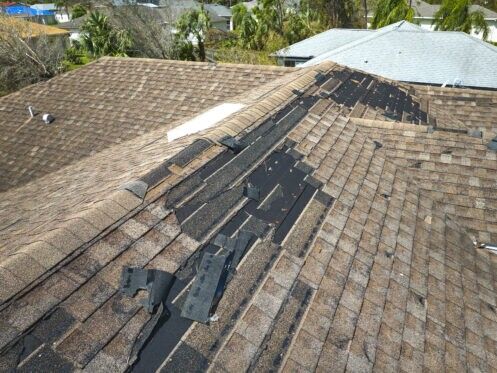
Damaged shingle roof with black tar patches and missing sections on a house
By Crystal Watterson March 10, 2026
Roof problems can develop during the winter months. Greater American Roofing explains what to look for and offers great solutions.
Windshield wiper clearing raindrops on a car windshield in a car wash tunnel
By Crystal Watterson March 3, 2026
If the gutters aren't working correctly, it can cause damage to your roof and your home. Greater American Roofing has some helpful ideas.
White house gable with vented attic window and gray shingles against a pale sky
By Crystal Watterson February 12, 2026
When spring arrives it often brings some harsh weather. Greater American Roofing advises to get the roof checked before something happens.
Bundles of insulation between wooden rafters in an attic ceiling
By Crystal Watterson January 28, 2026
The insulation and ventilation of your home will affect the roof. Greater American Roofing explains why and offers some suggestions.
Window in a gray shingled roof reflecting clouds and sky
By Crystal Watterson January 16, 2026
Knowing the roof is in good shape before winter is a good plan. Greater American Roof discusses roof maintenance and how it helps.
Worker in safety vest and hard hat inspecting solar panels on a rooftop
By Crystal Watterson December 16, 2025
There are many reasons why regular roof inspections may be a good idea. Greater American Roofing lists some of those reasons.