Winter Roof Care for Historic Roswell Homes: How Slate, Cedar Shake, and Older Assemblies Fail
Slate and cedar wear out on their own schedule, and the warning signs look nothing like asphalt problems.
Schedule now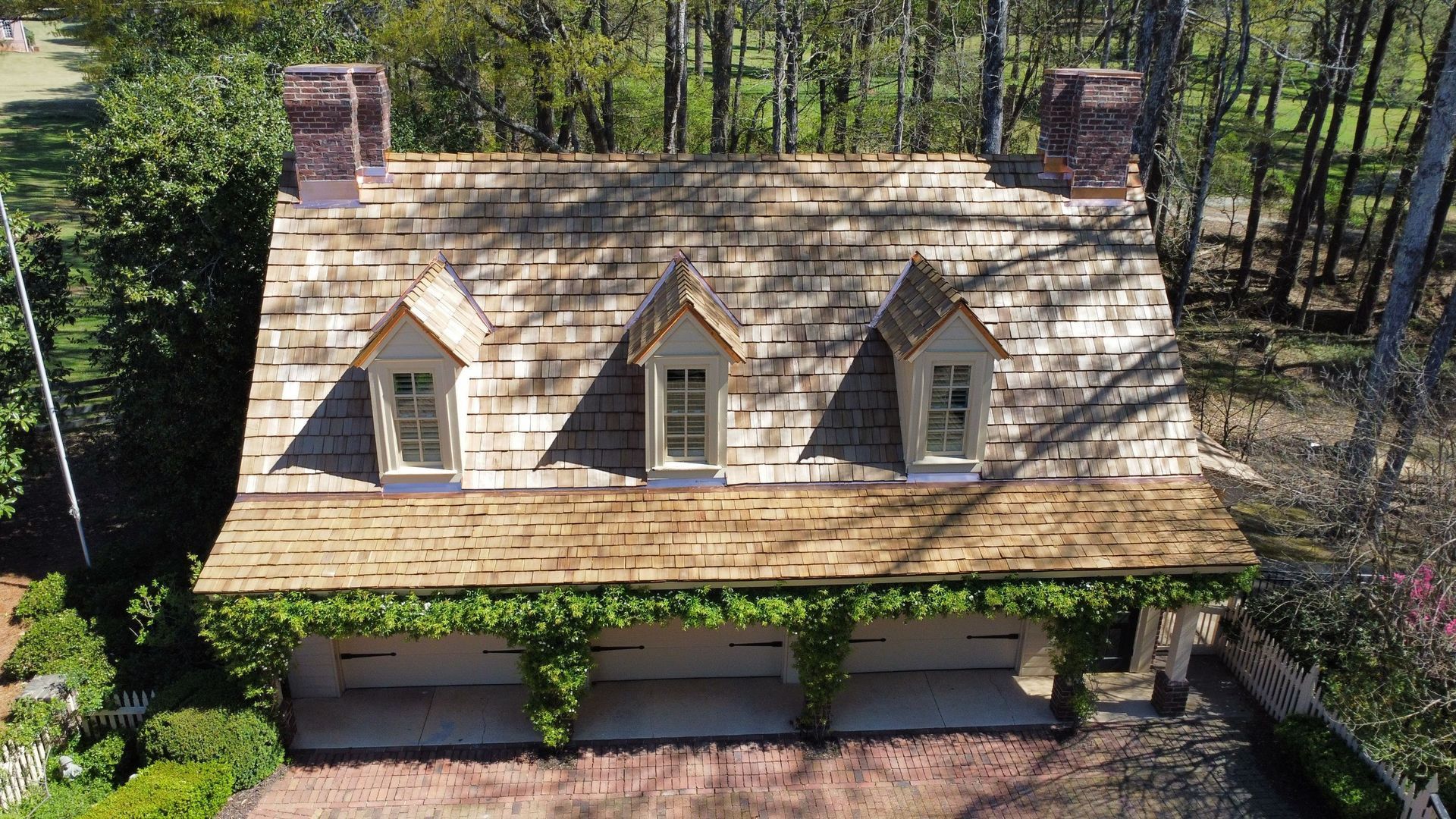
Roswell has one of the more intact historic cores in metro Atlanta, with homes dating to the town's founding era in the first half of the nineteenth century and a substantial stock of early twentieth century houses beyond that. Many still carry slate, cedar shake, or roof assemblies built with methods that have not been standard practice for decades.
These roofs fail differently than modern asphalt, and winter is when the differences show. A contractor who treats a slate roof like a shingle roof will cause damage, and a homeowner who inspects a historic roof looking for asphalt problems will miss what is actually happening.
In this guide
How freeze-thaw cycling works on slate
Slate is stone, and stone absorbs a small amount of water. When that absorbed water freezes it expands, and the expansion works on the slate from within. On sound slate this is a very slow process measured in decades. On slate that has already begun to delaminate, it is considerably faster.
The visible symptom is flaking or spalling at the surface, where thin layers separate and shed. Tapping a suspect slate gives a useful signal: sound slate rings, delaminating slate thuds. A roof with widespread thudding slates is approaching the end of its service life regardless of how it looks from the street.
The more common winter failure on slate roofs is not the slate at all. It is the fasteners. Slate was traditionally hung on copper or galvanized nails, and galvanized nails corrode long before the slate wears out. This is called nail sickness, and it produces slates that slip out of position individually with no apparent damage to the slate itself. A slate found on the ground in good condition after a freeze is usually a fastener problem.
What winter does to cedar shake
Cedar moves with moisture content. It swells when wet and shrinks when dry, and a cedar roof in Roswell goes through that cycle repeatedly through a humid Georgia year. Winter adds freezing to the equation, so water held in the wood expands inside the shake and splits it along the grain.
Shaded cedar roofs carry the additional problem of biological growth. Moss and lichen hold moisture against the wood surface, which keeps the shake saturated longer and accelerates both rot and freeze splitting. On a Roswell home under mature canopy, the north-facing cedar slopes are consistently in worse condition than the southern exposures.
Cupping and curling are the other winter indicators. A shake that has lifted at its edges no longer sheds water the way it was installed to, and it creates a channel for wind-driven rain to get beneath the course above. A roof with widespread cupping is admitting water in every storm whether or not it has produced an interior leak yet.
The assemblies underneath older roofs
Historic roofs often sit on skip sheathing, which is spaced boards rather than continuous decking. Cedar shake was designed for this, since the gaps let the underside of the wood dry. It also means there is no continuous surface beneath the roofing and frequently no underlayment at all.
The practical consequence is that there is no secondary barrier. On a modern asphalt roof, water that gets past a shingle hits underlayment and usually drains out harmlessly. On a skip-sheathed historic roof, water that gets past the roofing material is inside the attic.
Chimney flashing is the other recurring problem on these houses. Historic chimneys are masonry, often unlined, and mortar joints deteriorate over a century and a half of freeze-thaw. Flashing installed against deteriorated mortar has nothing solid to seal to. Water entering at a chimney is among the most common leak sources on older Roswell homes and among the most often misdiagnosed.
What to inspect and what not to do
A winter inspection on a historic roof looks at fastener condition, slate or shake integrity, flashing at chimneys and valleys, mortar joint condition, and the attic side for daylight, staining, and active moisture. The attic view is particularly valuable on a skip-sheathed roof because problems are visible from below before they appear as interior damage.
Walking on slate is the thing not to do. Slate cracks under foot load, and a roof inspected by someone walking it freely will have more broken slates afterward than before. Proper inspection uses ladders, roof hooks, and staging that distributes load, or it is done from a lift.
Repair material matching matters more than it does on asphalt. Replacement slate should match the existing in thickness, size, and ideally quarry, and fasteners should be copper or stainless rather than galvanized so the repair outlives the rest of the roof. Cedar replacement should match grade and exposure. Substituting modern asphalt patches onto a historic roof creates both an appearance problem and a differential wear problem at the transition.
Greater American Roofing in Roswell
Greater American Roofing works on slate, cedar shake, and older roof assemblies in Roswell with inspection and repair methods appropriate to the material rather than a one-size approach carried over from asphalt work. Call 404-348-2353 to discuss your home.
For an assessment of a historic roof, contact our Roswell roofing team and we will match the inspection approach to what the roof is made of.
Roofing services in Roswell, GA
Greater American Roofing provides inspection, repair, and replacement across asphalt, metal, slate, and cedar shake roofing for Roswell homeowners.
Contact Greater American Roofing about roofing services for your Roswell home.
Frequently Asked Questions
How do I know if my Roswell slate roof is failing or just aging?
Tap a suspect slate. Sound slate rings; delaminating slate produces a dull thud. Widespread thudding indicates the slate itself is near the end of its service life. If individual slates are slipping out of position but the slate is intact when you find it, the problem is fastener corrosion rather than the slate, and that is a repairable condition called nail sickness.
What is nail sickness on a slate roof?
Nail sickness is corrosion failure of the fasteners holding slates in place. Slate was traditionally hung on copper or galvanized nails, and galvanized nails corrode long before slate wears out. The symptom is slates slipping free individually while remaining undamaged themselves. Repairs should use copper or stainless fasteners so the repair outlasts the surrounding roof rather than failing again.
Why does cedar shake split during Roswell winters?
Cedar absorbs and releases moisture with humidity, swelling and shrinking through the year. When water held in the wood freezes, it expands and splits the shake along its grain. Shaded slopes under tree canopy are worse because moss and lichen hold moisture against the wood, keeping it saturated longer and accelerating both rot and freeze splitting.
Can someone walk on my historic slate roof to inspect it?
They should not walk it freely. Slate cracks under foot load, and an inspection done by walking the roof typically leaves more broken slates than it found. Proper inspection uses ladders, roof hooks, and staging that distributes weight, or it is performed from a lift. Ask specifically how a contractor plans to access the roof before they start.
What is skip sheathing and why does it matter on older Roswell homes?
Skip sheathing is spaced boards rather than continuous decking, used under cedar shake so the underside of the wood can dry. It means there is no continuous surface beneath the roofing and usually no underlayment, so there is no secondary barrier. Water that gets past the roofing material on a skip-sheathed roof is inside the attic rather than draining harmlessly.
Why are chimneys such a common leak source on historic Roswell homes?
Historic chimneys are masonry with mortar joints that deteriorate across a century or more of freeze-thaw cycling. Flashing installed against deteriorated mortar has nothing solid to seal against, so water enters at the joint. These leaks are frequently misdiagnosed as roofing failures because the water appears away from the chimney after traveling along framing.
Have your older roof assessed properly
We install and repair slate, cedar shake, and other specialty roofing systems, and a no-cost inspection is the right first step for an older home. Call (404) 348-2353 or contact us online.
Schedule now